
October 28, 2026
DTF Gang Sheet Prices: How to Compare the Real Cost of an Order
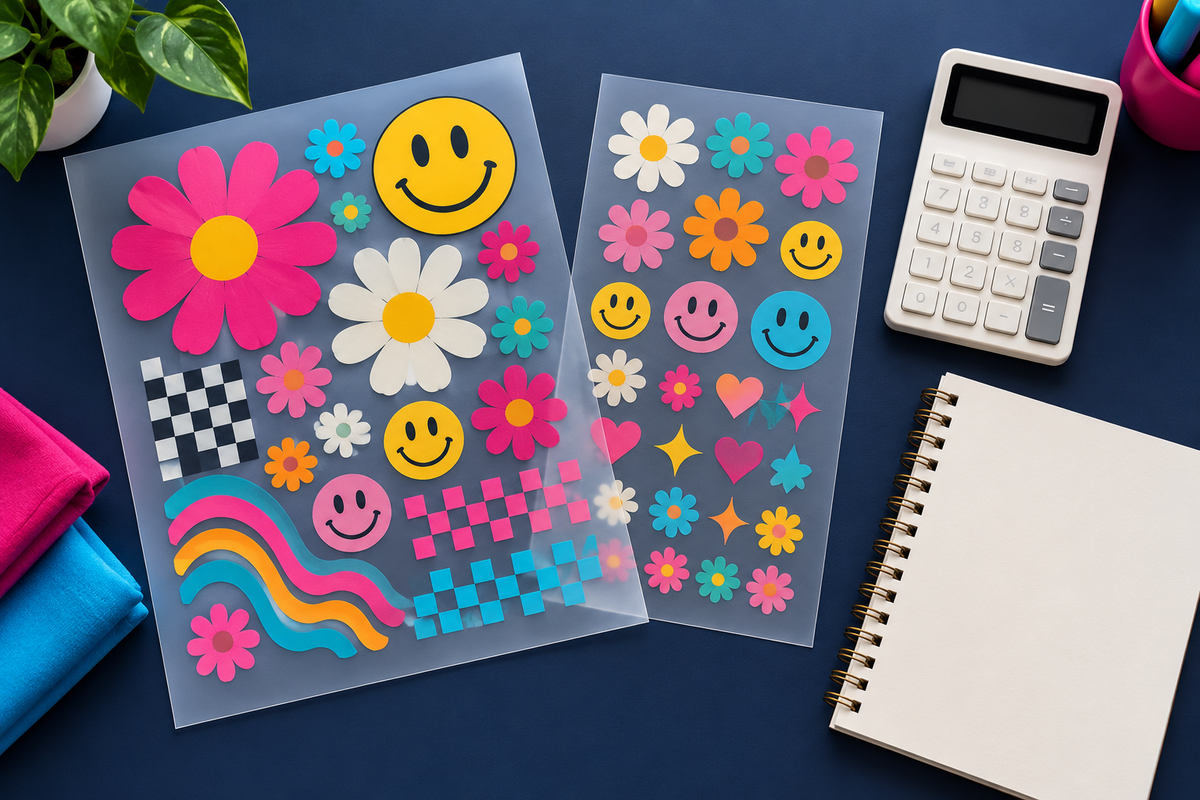
The most useful way to compare DTF gang sheet prices is to compare the cost of the transfers you actually need. A lower sheet price may not be the better order if the dimensions, usable layout, shipping charges, or finished quantities are different.
There is no single price that describes every gang sheet. This guide shows how to compare an order without confusing the price of one sheet with the cost of one finished transfer. All dollar examples below are hypothetical calculations, not Transfer Merch quotes.
Start with an equivalent comparison
Before comparing suppliers or layout options, write down the required artwork sizes and quantities. Then compare sheet dimensions, printable boundaries, number of sheets, artwork preparation requirements, and delivery needs.
A sheet that is wider or longer offers a different layout area. Even two sheets with the same total area may fit a particular design differently because their shapes differ. Total area is useful context, but it does not tell you the exact number of usable designs.
Calculate cost per usable transfer
For the sheet-only portion of the order, divide the sheet cost by the number of transfers on that sheet that you intend to use. Keep shipping and tax separate until you compare the full landed order cost.
Suppose a hypothetical sheet costs $24 and contains twelve needed transfers. The sheet-only allocation is $2 per transfer. If that same sheet contains twelve useful transfers plus four unwanted filler designs, those extras do not automatically reduce the real cost of the work you need.

Be careful with mixed-size artwork
If one layout combines small chest logos and large back graphics, dividing the sheet cost equally among all designs is only a rough average. It does not mean a small logo consumes the same space or production effort as a large graphic.
For internal quoting, choose a consistent way to allocate the cost—by design area, by an established production method, or by the complete job. Document the method so repeated quotes are comparable. Avoid presenting a blended average as the supplier’s price for each individual size.
Count every design, not just every sheet
Mixed layouts can create a quantity mismatch. A sheet containing eight chest logos and two back graphics produces twenty-four logos and six back graphics when ordered three times. If the project needs twenty of each, that layout does not meet the job’s requirements.
Build a count table before ordering. For each design, multiply copies per sheet by sheets ordered, then compare the result with the required finished quantity. Adjust the layout or sheet count based on the shortage.

Include shipping and applicable tax
Compare the checkout total for equivalent orders and destinations. A low advertised sheet price can be offset by other charges, while combining the work into one sensible order may change the shipping allocation.
If you allocate shipping across transfers, explain whether you divided it equally, by order value, or by another method. The best method for your business is one you can use consistently. Read the current shipping policy and review the actual checkout options rather than relying on an old promotion.
Separate transfer cost from finished-shirt cost
A printed transfer is one component of a decorated garment. The blank item, trimming and preparation, pressing labor, packaging, and other job costs still need to be considered when you quote the finished product.
Do not treat the transfer cost as the complete cost of making a shirt. Equally, do not compare a printed gang sheet with a finished garment quote as though they are the same product.

Save space without changing the requested print
Efficient arrangement can help you use the available sheet area, but shrinking artwork to fit more copies changes the finished result. Confirm that any size adjustment is acceptable before rebuilding the layout.
Leave enough room to cut transfers apart and respect the provider’s printable boundaries. Overlapping designs or placing important detail outside the printable area creates an unusable layout, regardless of its apparent efficiency.
What to send when requesting a quote
- The required print width and height for each design.
- The number of copies needed for each size.
- Whether you have individual files or a finished sheet.
- The destination and any required delivery date.
- Any artwork questions that need review.
Contact Transfer Merch for project-specific pricing. For layout preparation, see how to make a gang sheet. If you are new to the format, start with what a DTF gang sheet is.